Passa al contenuto principale

THE THREAD

FROM COURAGE TO SAFETY.

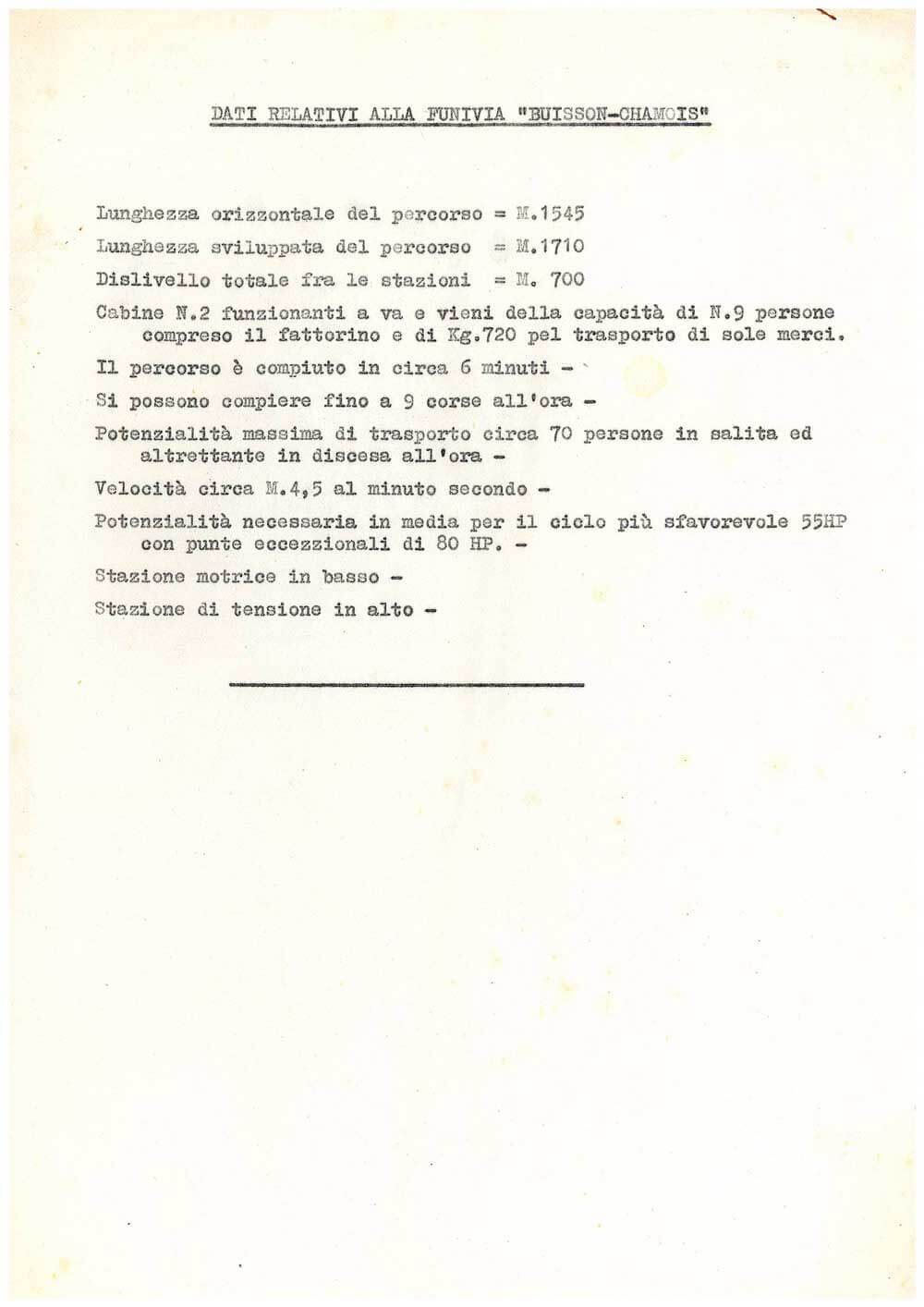
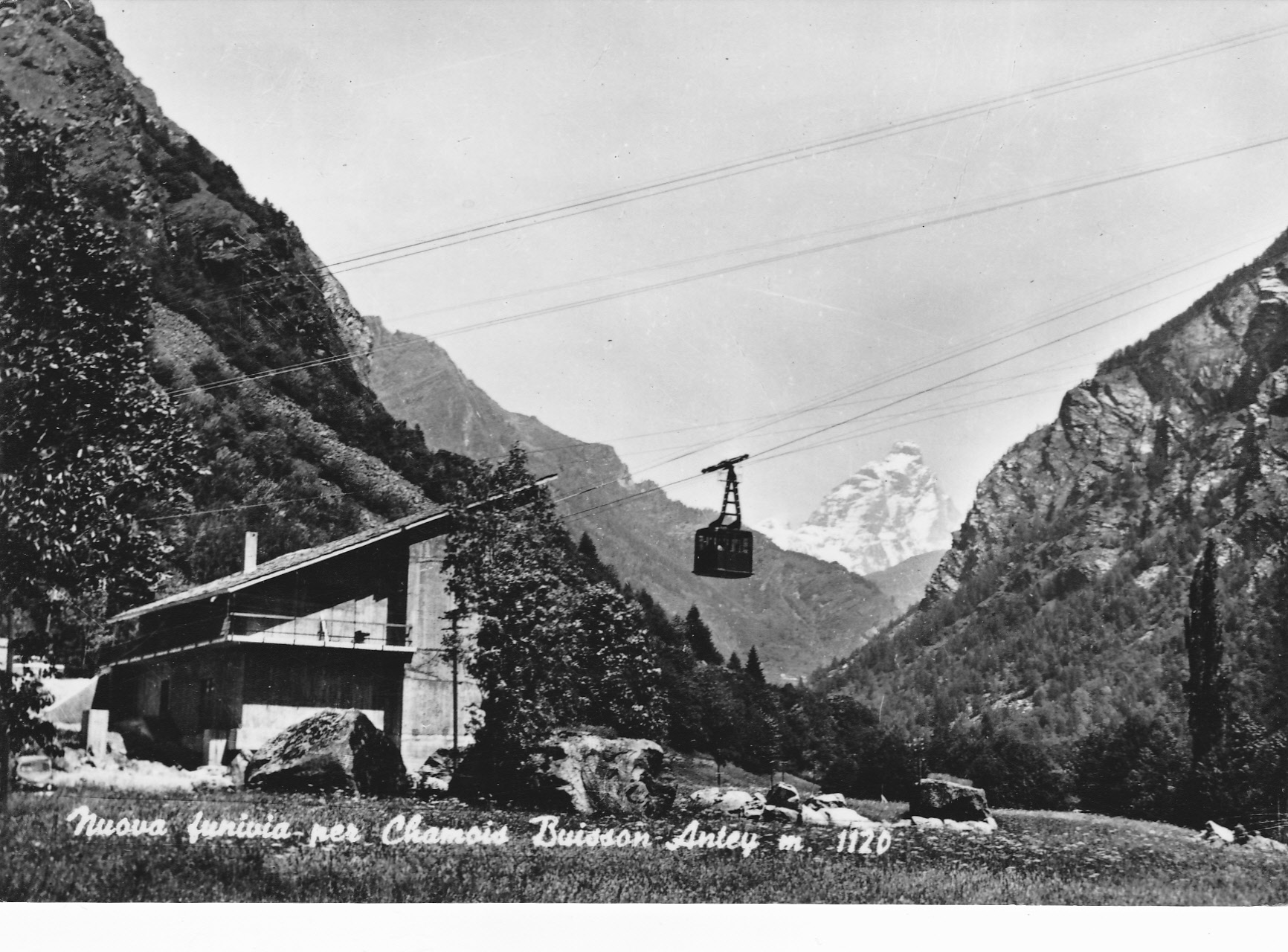
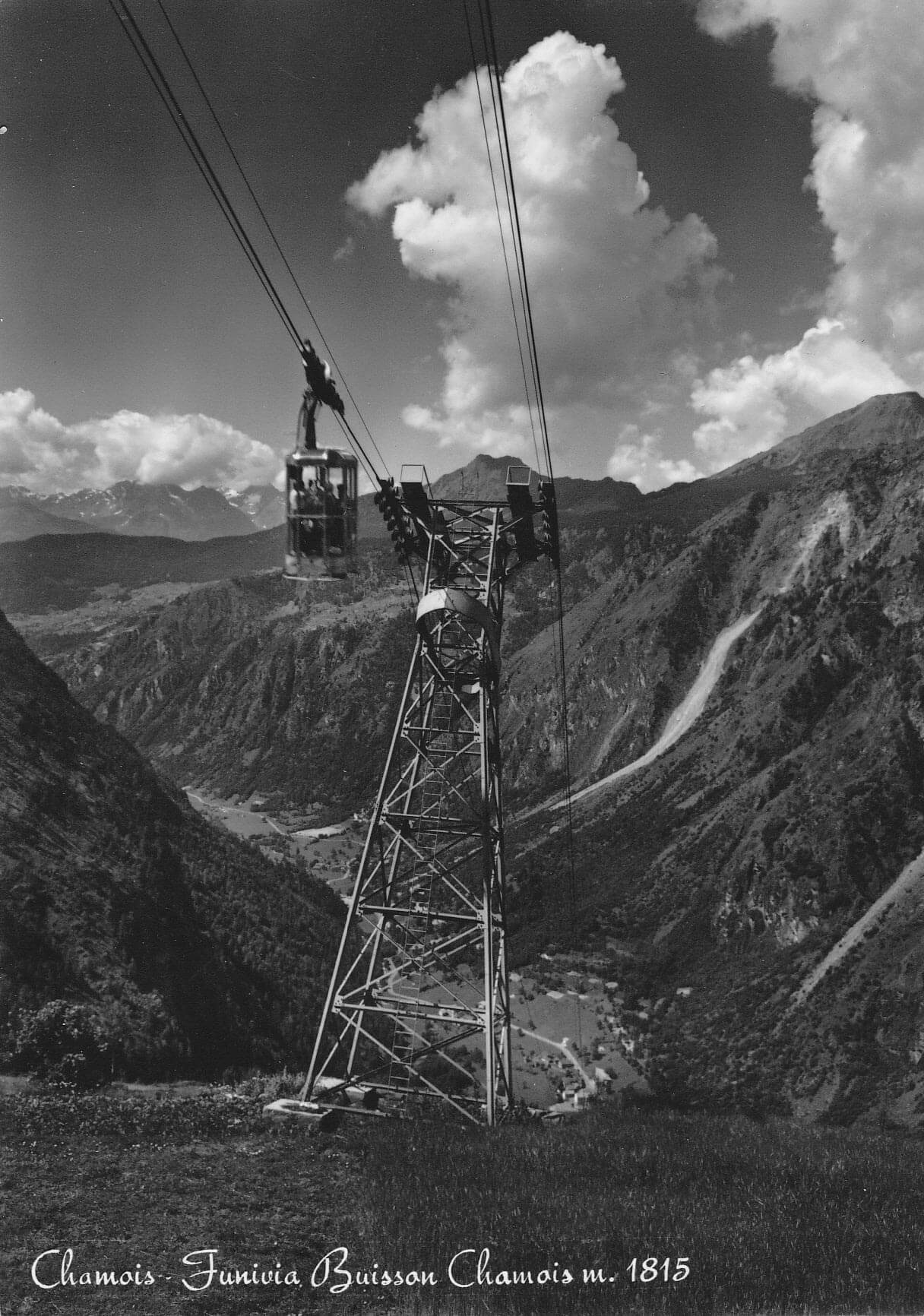
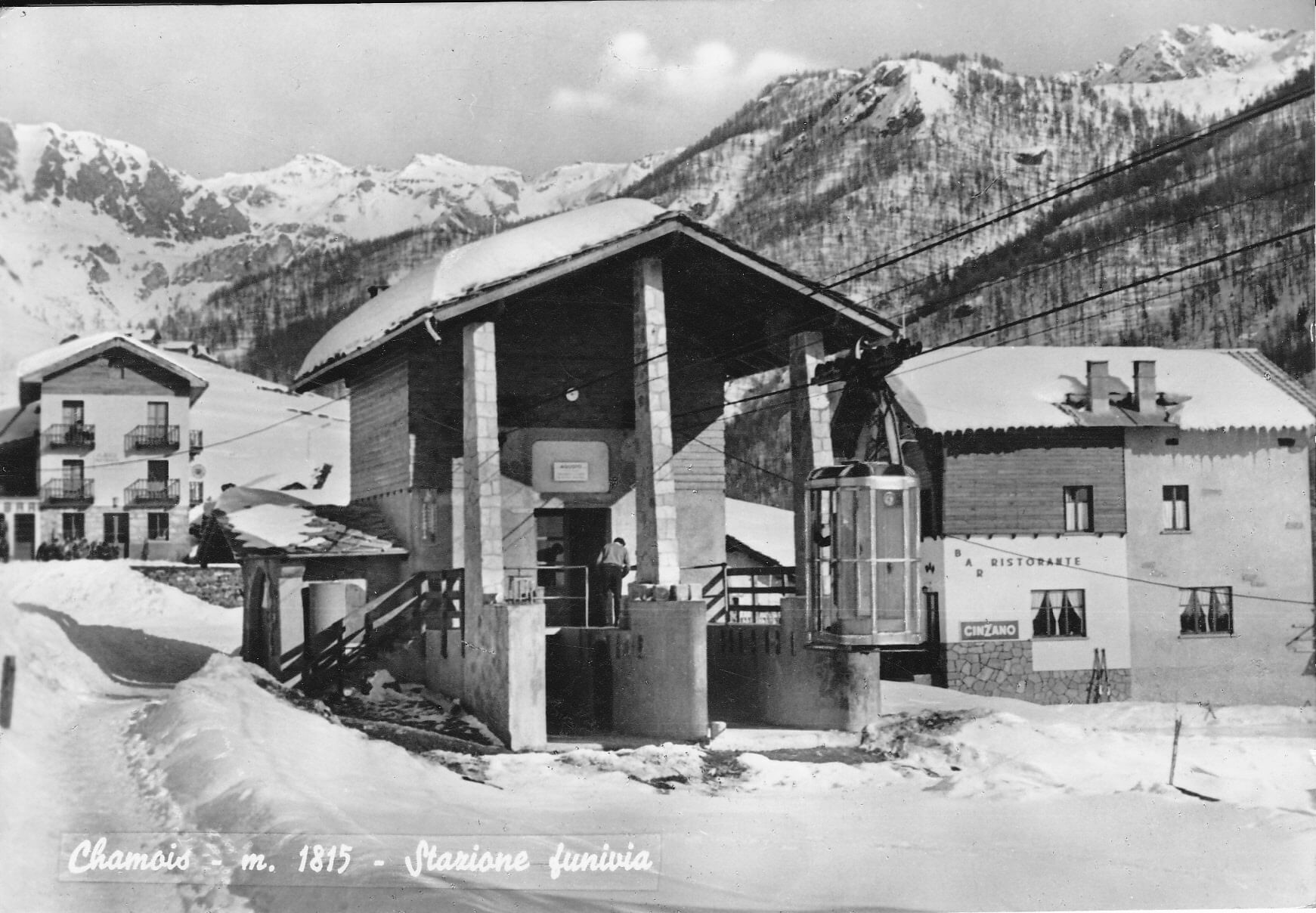
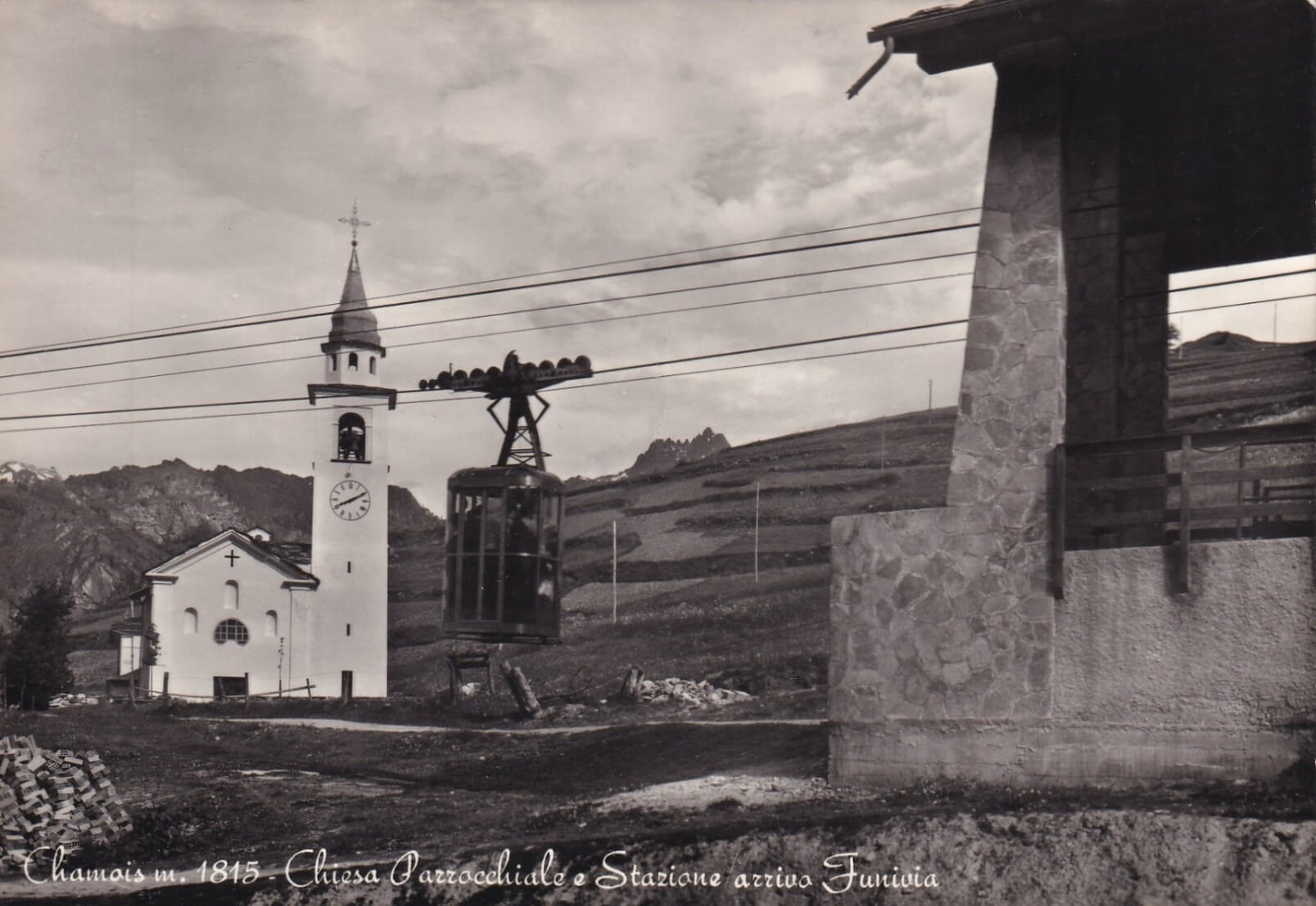
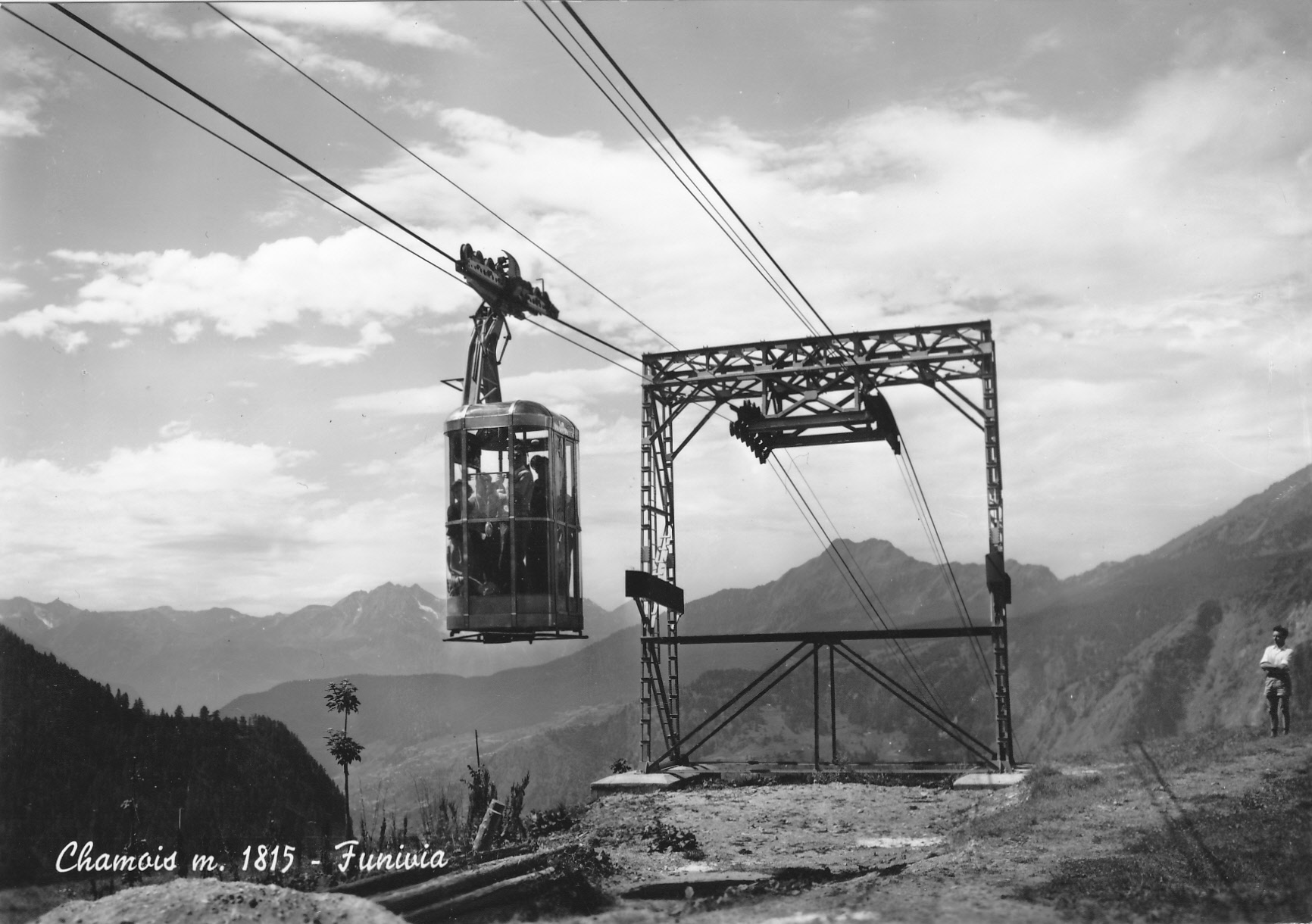
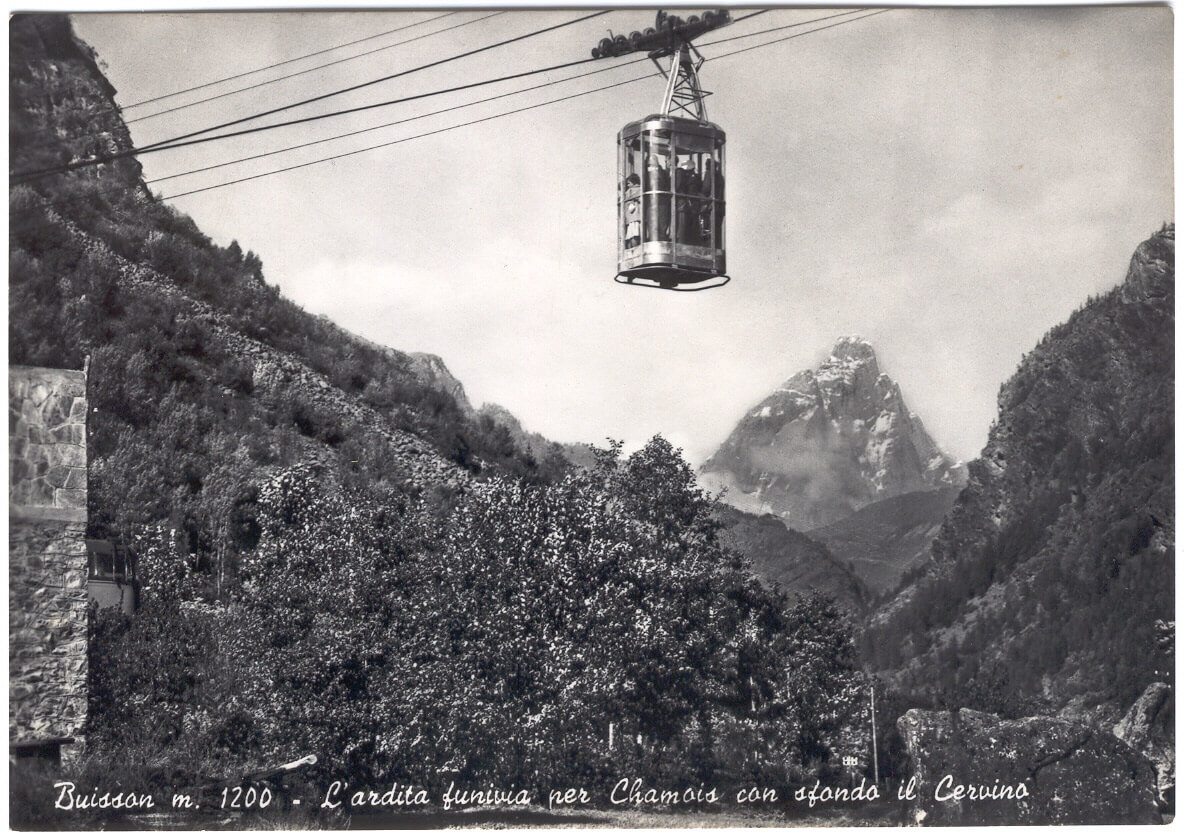
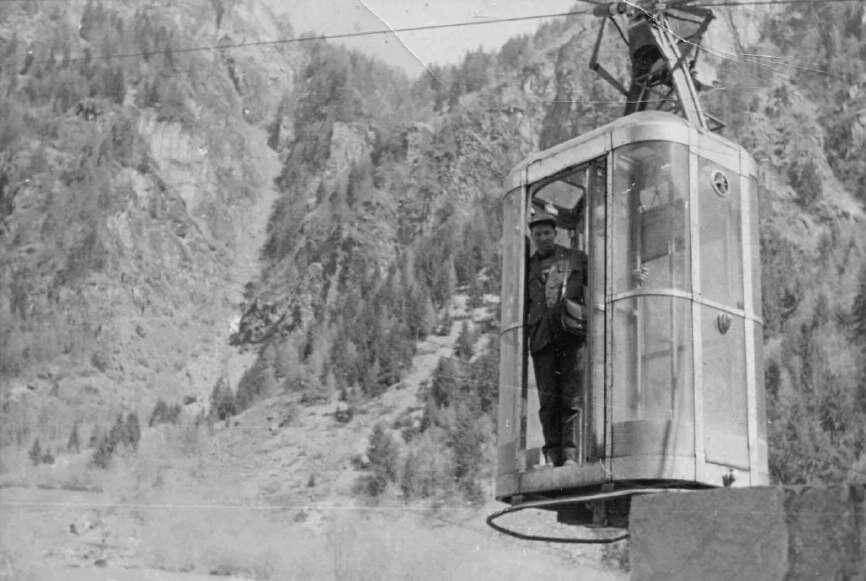
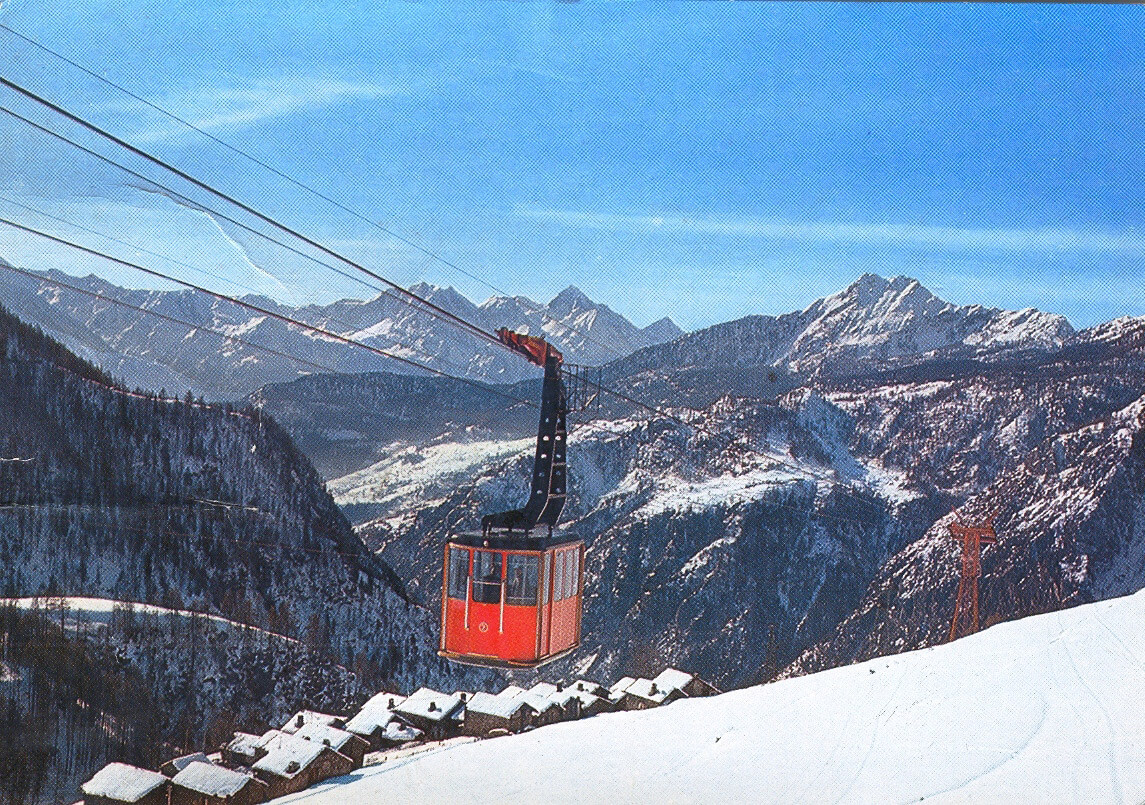
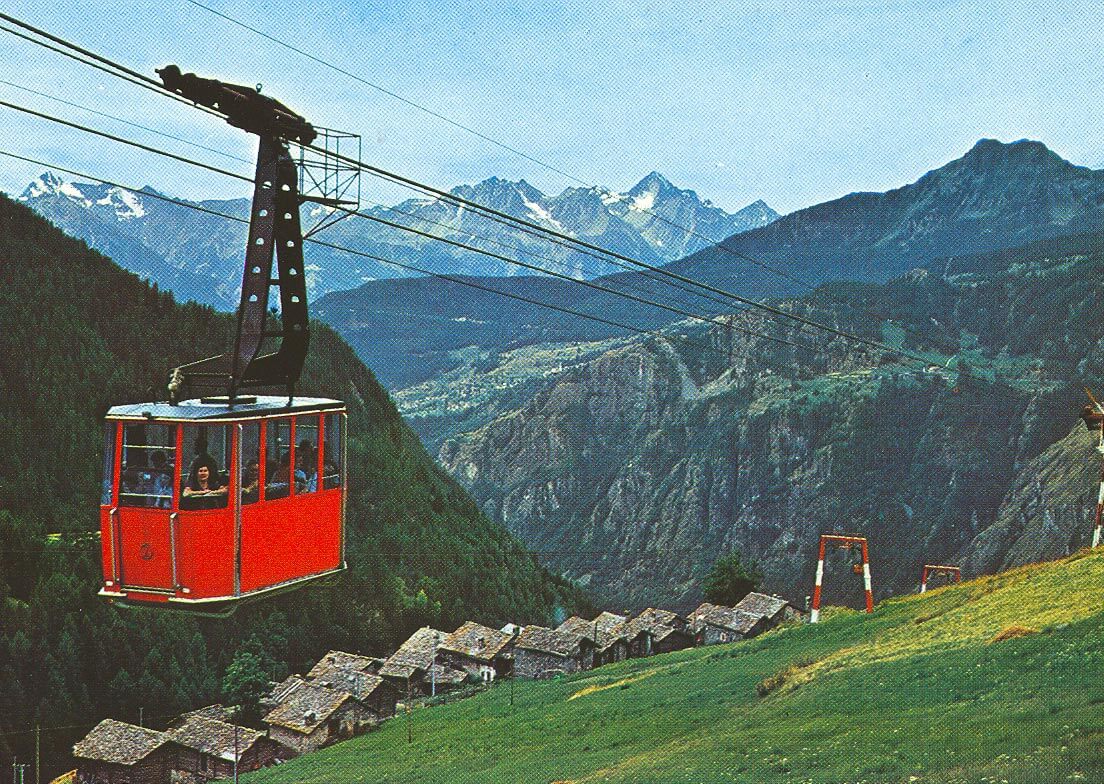
The first cable car of 1955, built by the Agudio company, was a feat of courageous and pioneering engineering. For a decade, those small metal and plexiglass cabins, with a capacity of eight people, were the only umbilical cord between Chamois and the world. In those years, managing the system was a daily challenge, entrusted to the skill of operators and conductors who ensured the connection even in adverse weather conditions.

The experience gained from the first system was fundamental for its evolution. With the engine located in the valley and the counterweight system at the top, the line was sensitive to wind, requiring constant slowdowns to ensure cabin stability. Despite the technical limitations of the time and a tragic accident that halted operations for several months, it was clear that the cable car was the key to the village’s survival.

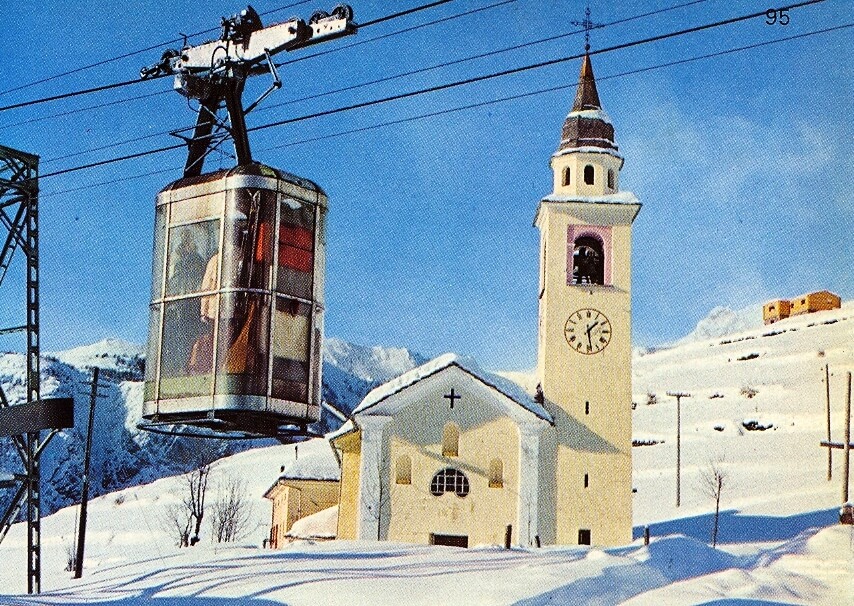
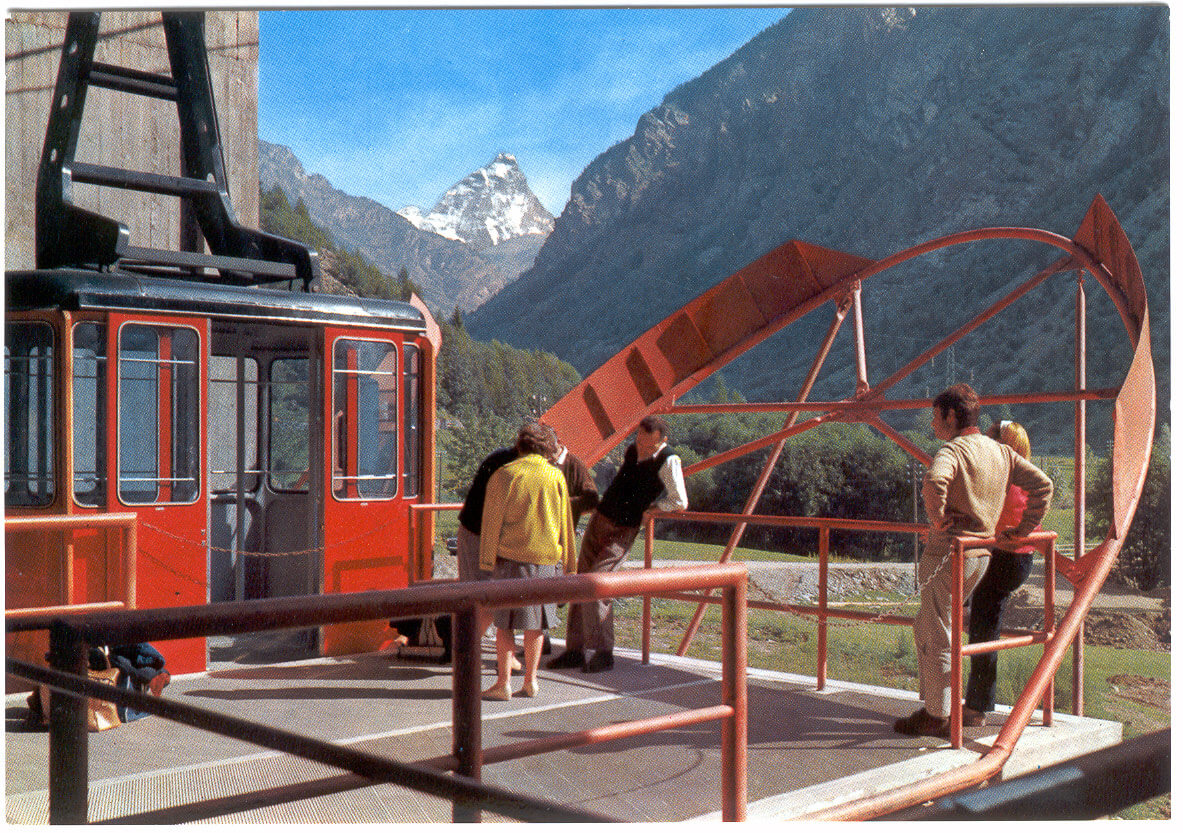
January 6th 1968 marked a true turning point with the inauguration of the Ceretti & Tanfani system, with the engine located at the top. More powerful and set back from the main square to give the village center room to breathe, this system increased capacity to 35 people, tripling tourist flow in just a few years. The most significant innovation was the introduction of a night emergency service: with caretaker Bruno Ducly residing directly at the station, the cable car became a 24-hour emergency link, ensuring healthcare access and rapid response for the entire community.

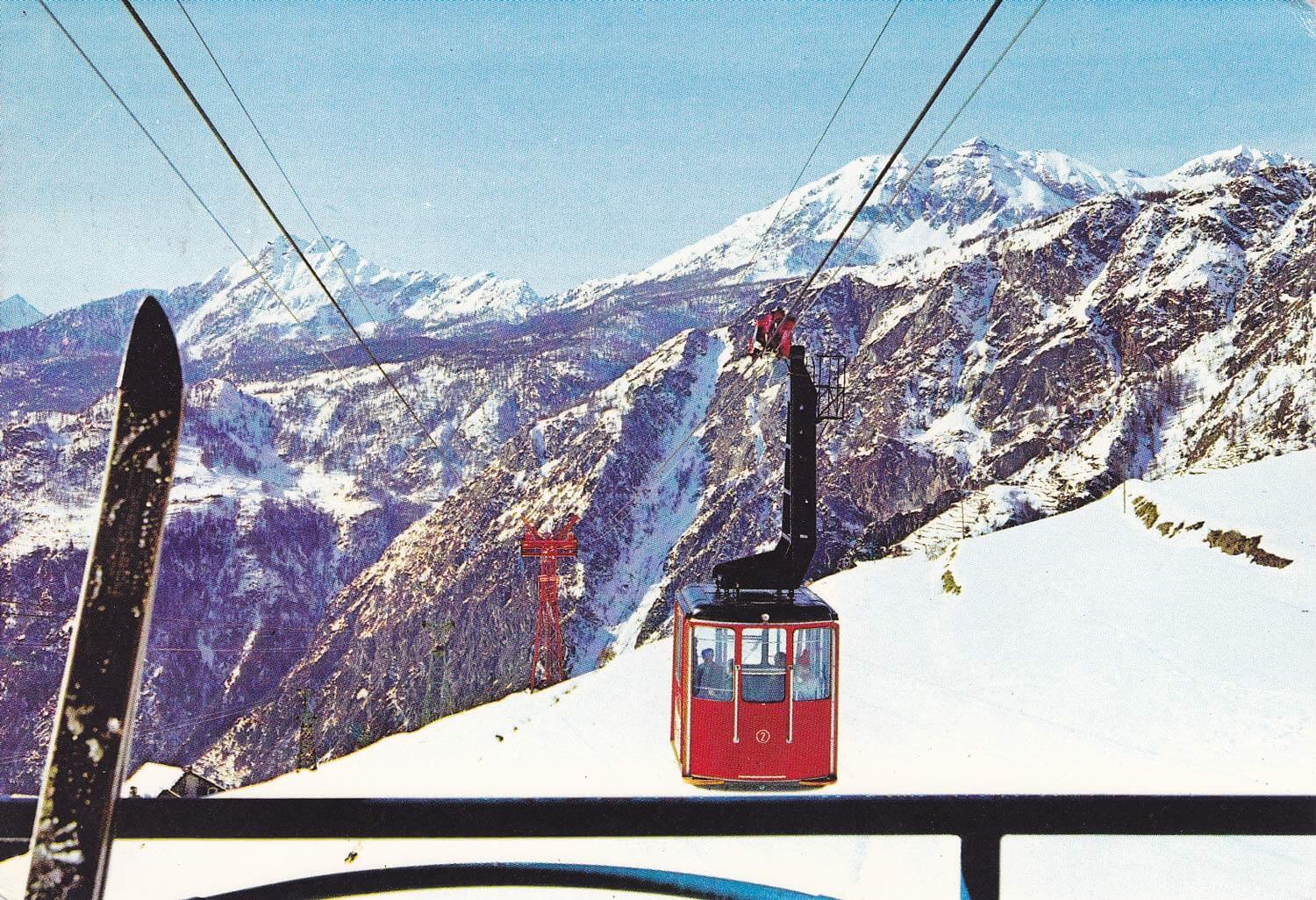
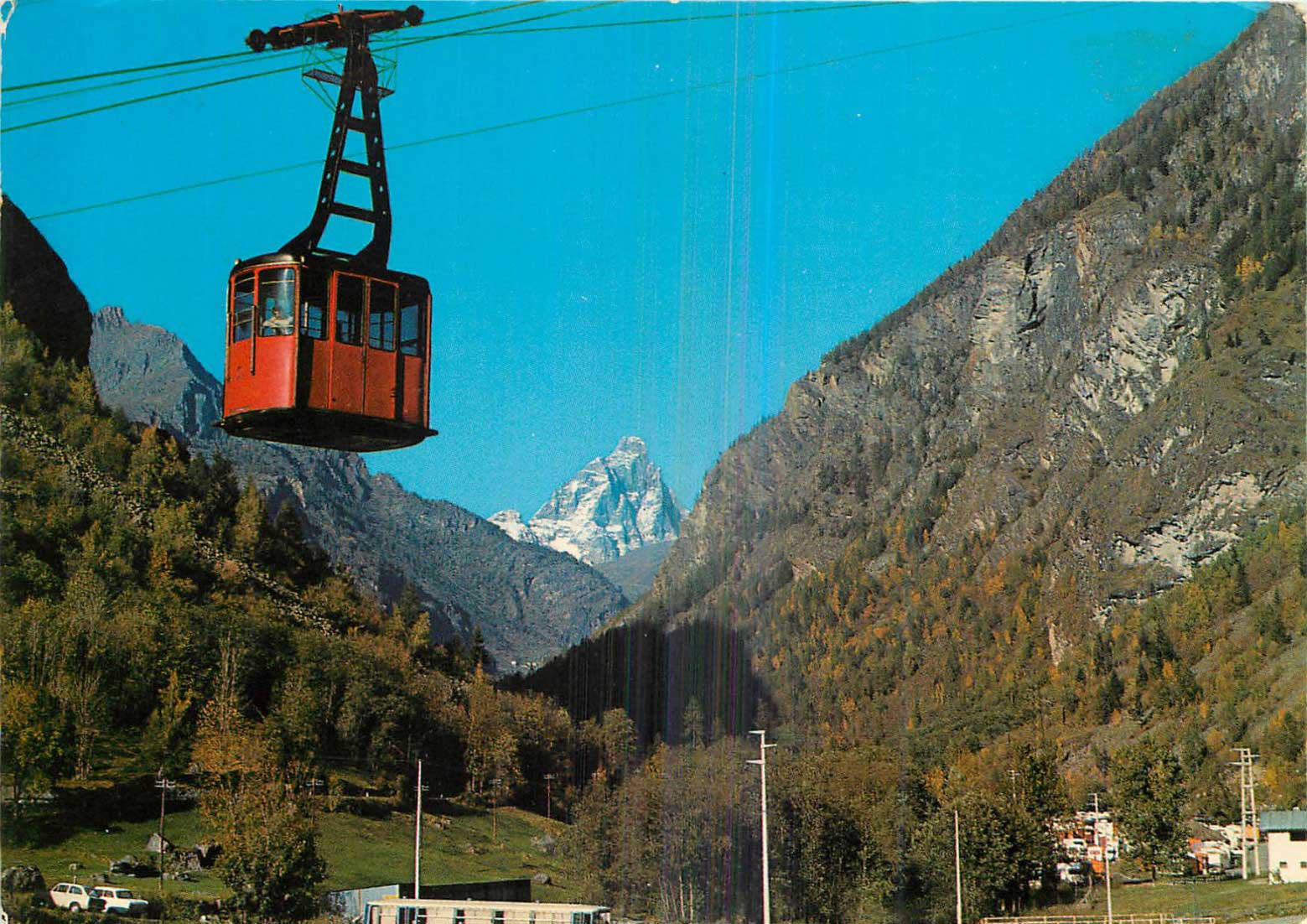
This constant pursuit of efficiency led, on November 22nd 1996, to a major modernization by the South Tyrolean company Hölzl and the launch of the current cable car. Although the stations were renovated while maintaining their 1960s dimensions to preserve the village’s aesthetic, the technological heart was completely renewed: a new BMB electrical system and new motor-gearbox units radically transformed the line’s performance. Evolution continued in 2003 with a further increase in capacity, thanks to new cabins built by the Swoboda company.

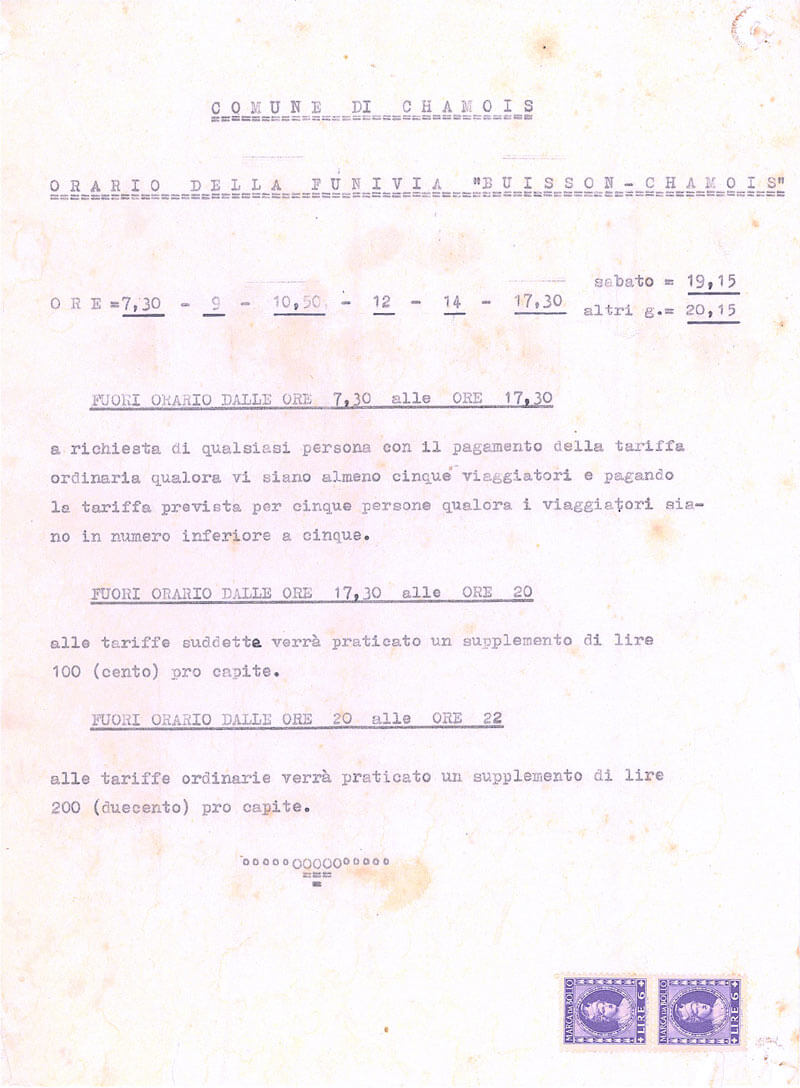
The commitment to safety and technical excellence has never wavered. With the general overhaul in 2021, the integration of new drives and programmers achieved standards of excellence, combining high speed, silence and maximum reliability. Today, the Buisson-Chamois cable car operates from 7:00 AM to 10:30 PM as a pillar of Local Public Transport and remains available as a private service for emergencies during the night, staying true to its original mission: being, every day of the year, the safe path through the sky.

IL FILO

DAL CORAGGIO ALLA SICUREZZA.

La prima funivia del 1955, realizzata dalla ditta Agudio, fu un’impresa di ingegneria coraggiosa e pionieristica. Per un decennio, quelle piccole cabine in metallo e plexiglass, con portata di 8 persone, furono l’unico cordone ombelicale tra Chamois e il mondo. In quegli anni, la gestione dell’impianto era una sfida quotidiana, affidata alla perizia di manovratori e vettorini che garantivano il collegamento anche in condizioni meteorologiche avverse.

L’esperienza acquisita con il primo impianto fu fondamentale per evolvere: la motrice situata a valle e il sistema di contrappesi a monte rendevano infatti la linea sensibile al vento, richiedendo rallentamenti costanti per garantire la stabilità delle cabine. Nonostante i limiti tecnici dell’epoca e un tragico incidente che fermò l’attività dell’impianto per diversi mesi, era evidente che la funivia fosse la chiave per la sopravvivenza del borgo.

Il 6 gennaio 1968 segnò la vera svolta con l’inaugurazione dell’impianto Ceretti & Tanfani. Più potente, arretrato rispetto alla piazza per dare respiro al centro abitato, questo impianto portò la capienza a 35 persone, triplicando i flussi turistici in pochi anni. La novità più importante fu l’introduzione del servizio straordinario notturno: con il custode Bruno Ducly che risiedeva direttamente alla stazione, la funivia divenne un servizio di emergenza attivo 24 ore su 24, garantendo sicurezza sanitaria e pronto intervento per tutta la comunità.

Questa costante ricerca di efficienza ha portato, il 22 novembre 1996, a un profondo ammodernamento dell’impianto ad opera della ditta altoatesina Hölzl e all’entrata in funzione dell’odierna funivia. Sebbene le stazioni siano state ristrutturate mantenendo i volumi degli anni ’60 per preservare l’estetica del borgo, il cuore tecnologico è stato completamente rinnovato: un nuovo impianto elettrico BMB e nuovi gruppi motori-riduttori hanno trasformato radicalmente le prestazioni della linea. L’evoluzione è proseguita nel 2003 con un ulteriore aumento della portata grazie alle nuove cabine costruite dalla ditta Swoboda.

L’impegno per la sicurezza e l’avanguardia tecnica non si è mai fermato: con la revisione generale del 2021, l’integrazione di nuovi azionamenti e programmatori ha permesso di raggiungere standard d’eccellenza, combinando alta velocità, silenziosità e massima affidabilità.
Oggi, la funivia Buisson-Chamois opera dalle 7:00 alle 22:30 come pilastro del Trasporto Pubblico Locale e resta disponibile in servizio privato per le sole emergenze durante la notte, restando fedele alla sua missione originale: essere, ogni giorno dell’anno, la via sicura verso il cielo.

Le téléphérique

Du courage à la sécurité.

Le premier téléphérique de 1955, réalisé par l’entreprise Agudio, fut l’exploit d’ingénierie de pionniers courageux. Pendant une décennie, ces petites cabines en métal et plexiglas, à la capacité de 8 personnes, furent l’unique cordon ombilical reliant Chamois au monde. Au cours de ces années, la gestion de cette remontée représentait un défi quotidien, confié à l’expertise de conducteurs, mécaniciens et cabiniers garantissant la liaison par tous les temps, même dans des conditions météo défavorables.

L’expérience acquise avec le premier téléphérique fut fondamentale pour évoluer ensuite : comme la motrice située dans la gare aval et le système de contrepoids amont rendaient la ligne sensible aux vents, de fréquents ralentissements étaient nécessaires afin de garantir la stabilité des cabines. Malgré les limites techniques de l’époque et un accident tragique qui arrêta l’activité de l’installation pendant plusieurs mois, il était évident que le téléphérique était bien la clé pour la survie du bourg.

Le 6 janvier 1968 marqua un véritable tournant avec l’inauguration de l’installation Ceretti & Tanfani, déplaçant la motrice dans la gare amont. Plus puissant, plus reculé par rapport à la place afin d’offrir davantage d’ampleur au centre du bourg, ce nouveau téléphérique augmenta la capacité de la cabine à 35 personnes, ce qui permit de tripler les flux touristiques en quelques années seulement. La nouveauté la plus importante fut l’introduction du service nocturne extraordinaire : avec le gardien Bruno Ducly logé directement à l’intérieur de la gare, le téléphérique devint un service d’émergence actif 24 heures sur 24, garantissant la sécurité sanitaire ainsi qu’une prompte intervention pour toute la communauté.

Cette recherche constante d’efficience amena, le 22 novembre 1996, une profonde rénovation de l’installation par l’entreprise Hölzl du Tyrol du Sud et la mise en fonction du téléphérique actuel. Bien que les gares aient été réaménagées en gardant les volumes des années ‘60 afin de préserver l’esthétique du bourg, le cœur technologique a été complètement rénové : de nouveaux équipements électriques BMB ainsi que de nouveaux groupes moto-réducteurs ont radicalement transformé les performances de la ligne. L’évolution a encore progressé en 2003, avec une ultérieure augmentation de la capacité fournie par les nouvelles cabines construites par l’entreprise Swoboda.

Le souci pour la sécurité et la recherche d’une technique de pointe n’a jamais eu de répit : lors de la révision générale de 2021, l’intégration de nouveaux actionneurs et automates a permis d’atteindre des standards d’excellence, alliant haute vitesse, silence et fiabilité maximale.
De nos jours, le téléphérique Buisson-Chamois est opérationnel de 7h00 à 22h30 dans son rôle de pilier du Transport Public Local ; il reste encore disponible pendant la nuit pour les seules émergences, en régime de service privé, fidèle à sa mission primordiale : être, à tout instant, la voie sûre vers le ciel.