Ascending
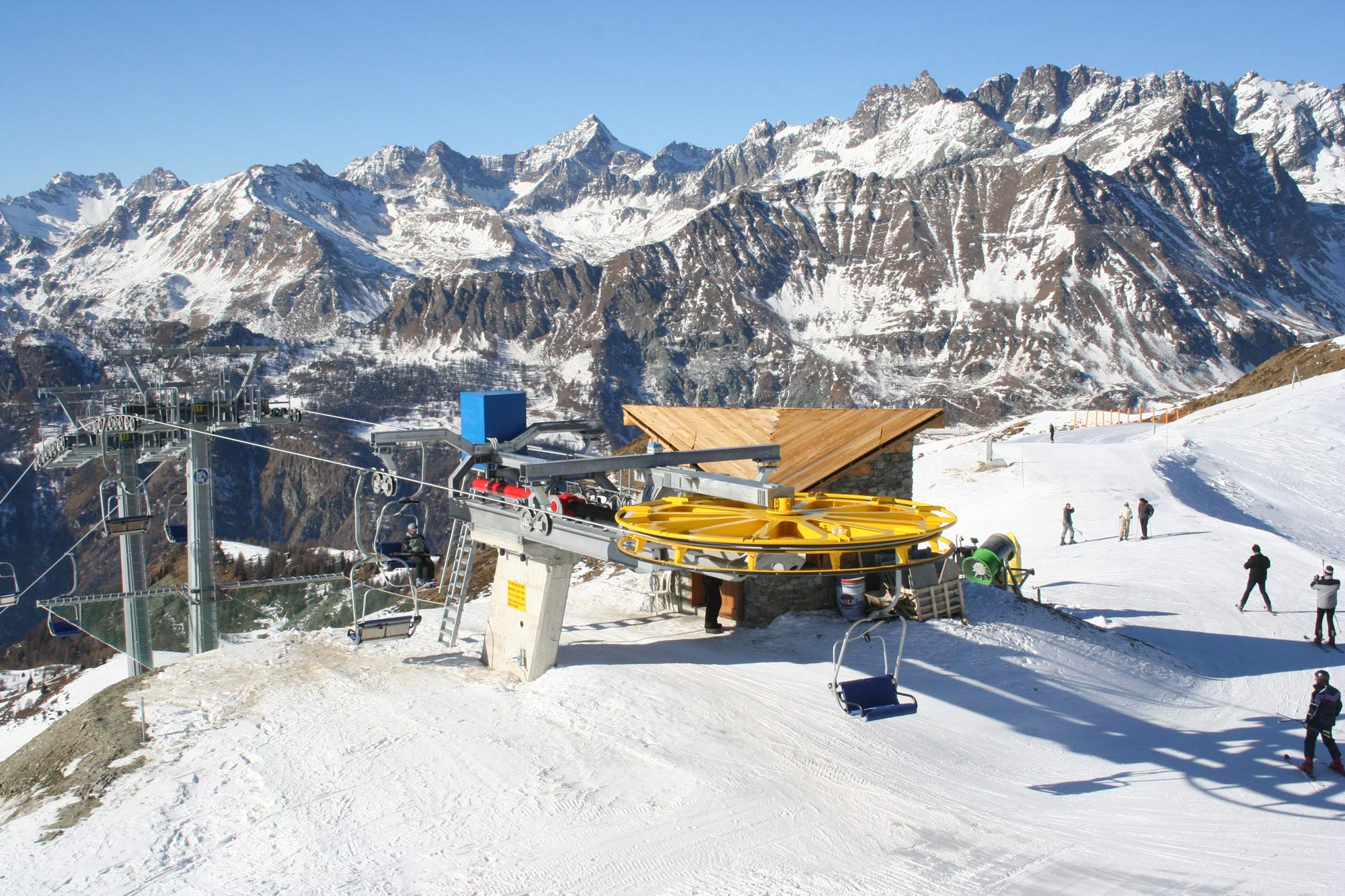
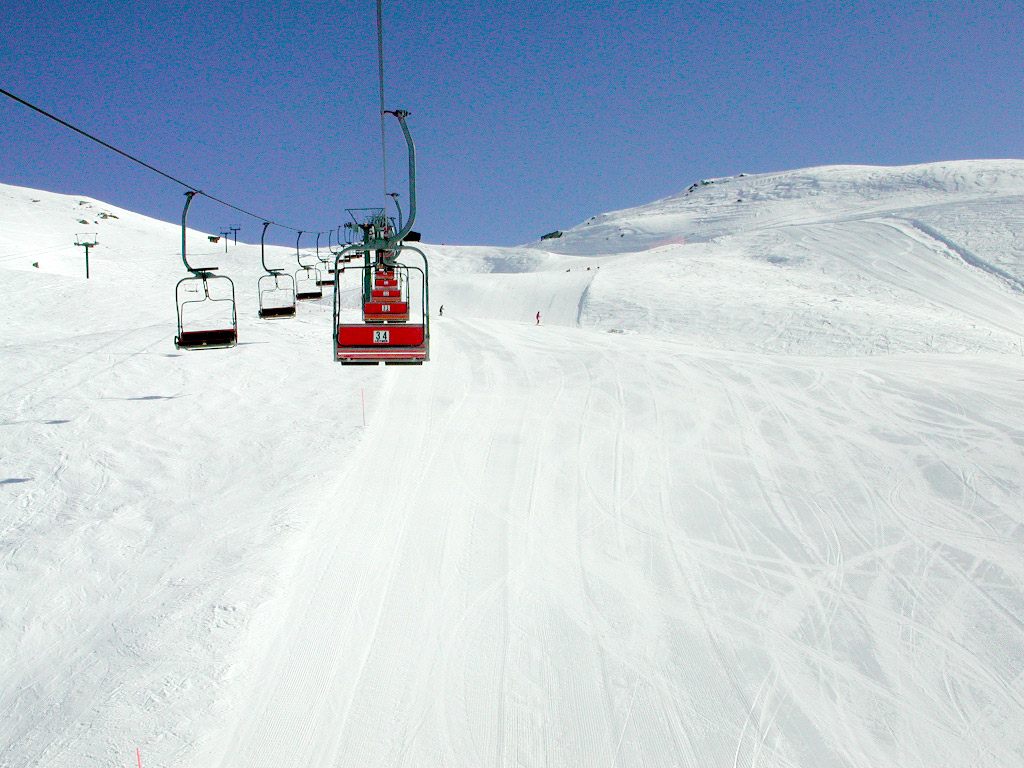
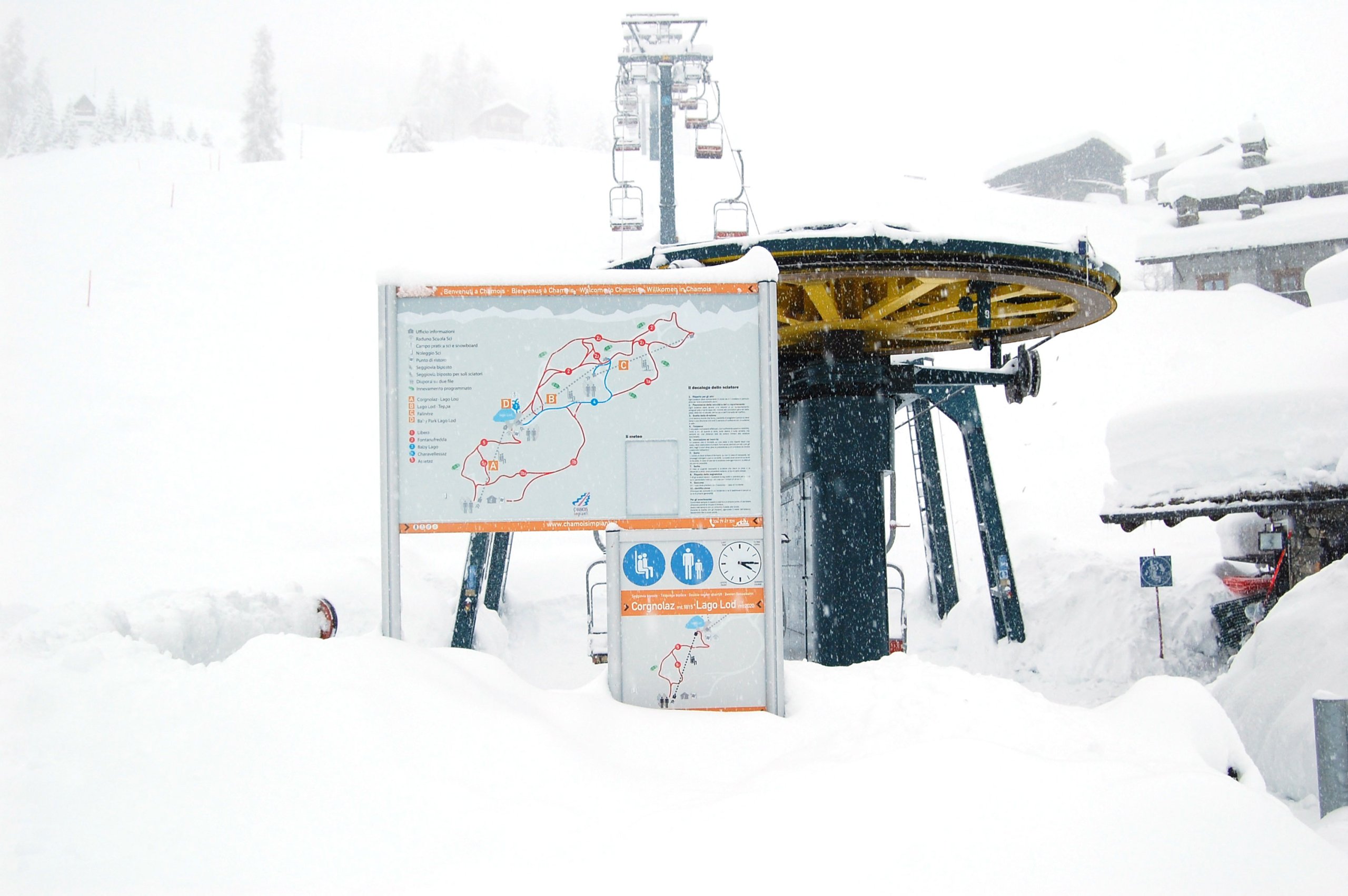
The true engine of winter tourism officialy started during Christmas of 1960, with the inauguration of the Corgnolaz – Lake Lod chairlift (KM5). Built by the SITA company of Milan, the lift climbed a 200-meter vertical drop in 7 minutes, allowing the first skiers to reach the Lake Lod at an altitude of 2018 meters. During the same years, it was joined by the historic Cita single-seater chairlift, whose slow rhythm cradled generations of tourists.
The Lod basin: the pulsing heart
The development around the lake was constant. In the 60s and 70s four ski lifts were built: the most challenging one – which was 1000-meter long – took the expert skiers to Col Cheneil, at an altitude of 2275 meters, while shorter lifts like Tzaravelessa served beginners. Two other ski lifts, which are now decommissioned, Lake Lod (KS84) and Lake Lod II (KS83), served the central slopes from the 70s to the 90s, alongside the Chamois ski lift, a fundamental piece for the mobility of the village’s first skiers.
Towards the ridges and the panorama
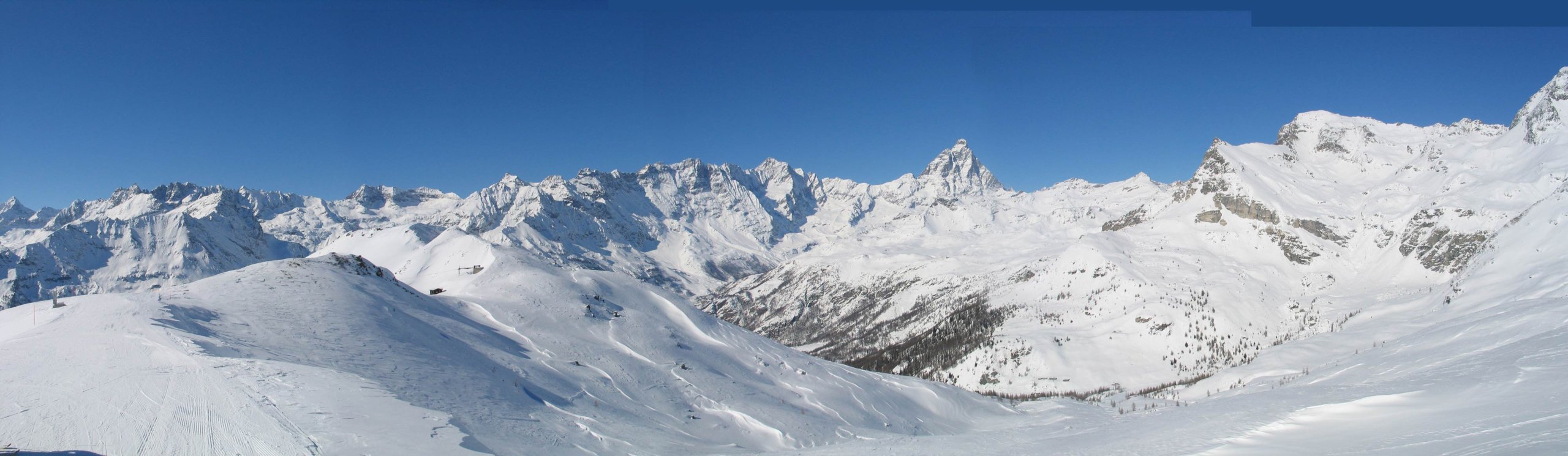
Between the late 70s and the early 80s, the station reached its maturity. The push towards the lateral ridges with the Crépin ski lift (KS69) and the subsequent construction of the Fontana Fredda ski lift (KS44) made it possible to reach the maximum altitude of 2472 meters. This expansion turned the first pioneers’ dream into reality: creating an unique panoramic balcony suspended between the silence of the village and the massive bulk of the Matterhorn.
Chamois still preserves the traces of a pioneering area made of small, local and often private ski lifts, now decommissioned: from the historic one right behind Chez Pierina to those of the SS Trinità and Charavellessa. Concrete foundations of these “ancestors” of skiing can still be found – silent monuments of a touristic archeology that tells the story of the resourcefullness and passion of an entire community.
SALIRE
Il vero motore del turismo invernale si accese ufficialmente nel Natale del 1960 con l’inaugurazione della Seggiovia Corgnolaz – Lago di Lod (KM5). Realizzata dalla ditta SITA di Milano, l’opera superava un dislivello di 200 metri in circa 7 minuti, permettendo ai primi sciatori di raggiungere la conca del Lod a quota 2018 metri. A questa si affiancò, negli stessi anni, la storica monoposto Cita, che con il suo ritmo lento ha cullato generazioni di villeggianti.
La conca del Lod: il cuore pulsante
Attorno al lago lo sviluppo fu costante. Negli anni ’60 e ’70 sorsero quattro sciovie: la più impegnativa (lunga 1000 metri) portava gli sciatori provetti verso il Col Cheneil, a quota 2275 metri, mentre impianti più brevi come quello di Tzaravelessa servivano i principianti. Altre due sciovie, oggi dismesse, Lago di Lod (KS84) e Lago di Lod II (KS83), hanno servito le piste centrali tra gli anni ‘70 e ‘90, affiancati dalla Sciovia Chamois, tassello fondamentale per la mobilità dei primi sciatori nel borgo.
Verso le creste e il panorama
Tra la fine degli anni ’70 e i primi anni ’80, il comprensorio raggiunse la sua maturità. La spinta verso le creste laterali con la sciovia di Crépin (KS69) e la successiva realizzazione della sciovia Fontana Fredda (KS44) permisero di toccare la quota massima di 2472 metri. Questo ampliamento realizzò il sogno dei pionieri: creare un balcone panoramico unico, sospeso tra il silenzio del borgo e la mole del Cervino.
Chamois custodisce anche le tracce di una stagione pionieristica fatta di piccoli skilift locali, spesso privati, oggi dismessi: da quello storico dietro Chez Pierina a quelli della SS Trinità e di Charavellessa. Di questi “antenati” dello sci rimangono i plinti in cemento, silenziosi monumenti di un’archeologia turistica che racconta l’ingegno e la passione di una comunità intera.
MONTER
Le véritable moteur du tourisme hivernal démarra officiellement à Noël 1960 par l’inauguration du télésiège Corgnolaz-Lac de Lod (KM5) : réalisé par l’entreprise SITA de Milan, il couvrait une dénivelée de 200 m en 7 minutes environ, permettant aux premiers skieurs d’atteindre la combe de Lod à 2018 m. À cette première remontée on rajouta, au cours des mêmes années, le télésiège monoplace Cita, qui a bercé de son rythme lent des générations de vacanciers.
La combe de Lod : le cœur
Autour du lac, le développement fut grandissant. Dans les années ‘60 et ‘70 on aménagea quatre téléskis desservant des pistes variées : le plus performant, de 1000 m de long, amenait les skieurs les plus expérimentés jusqu’à 2275 m d’altitude vers le col Cheneil, alors que les débutants pouvaient choisir des remontées plus courtes comme celle de Tsaravalessa. Deux autres téléskis, aujourd’hui démantelés, Lac de Lod (KS84) et Lac de Lod II (KS83), desservaient les pistes centrales entre 1970 et 1990, à côté du téléski Chamois, pivot incontournable pour la mobilité des premiers skieurs dans le domaine.
Vers les crêtes et le panorama
Entre la fin des années ‘70 et début ‘80, le domaine skiable prit son plein essor. L’élan vers les crêtes latérales par le téléski Crépin (KS69) ainsi que par la réalisation successive du téléski Fontana Fredda (KS44) permit d’atteindre l’altitude maximale de 2472 m. Cette expansion réalisa le rêve des pionniers : créer un superbe balcon panoramique naturel, suspendu entre le silence du bourg et la silhouette incomparable du Cervin.
Par ailleurs, Chamois abrite aussi les traces d’une saison de pionniers, souvent des particuliers, construisant de petits téléskis privés, aujourd’hui démantelés, allant de l’installation historique située derrière l’hôtel Chez Pierina à celles de la Ste Trinité et de Charavellessa. De ces vestiges du ski, on n’aperçoit plus que des plinthes en béton, monuments silencieux d’une archéologie touristique témoignant de l’ingéniosité et de la passion d’une communauté toute entière.